Why it’s not as simple as ‘eat less move more’ to lose weight
March 11, 2023
 By Claire Jones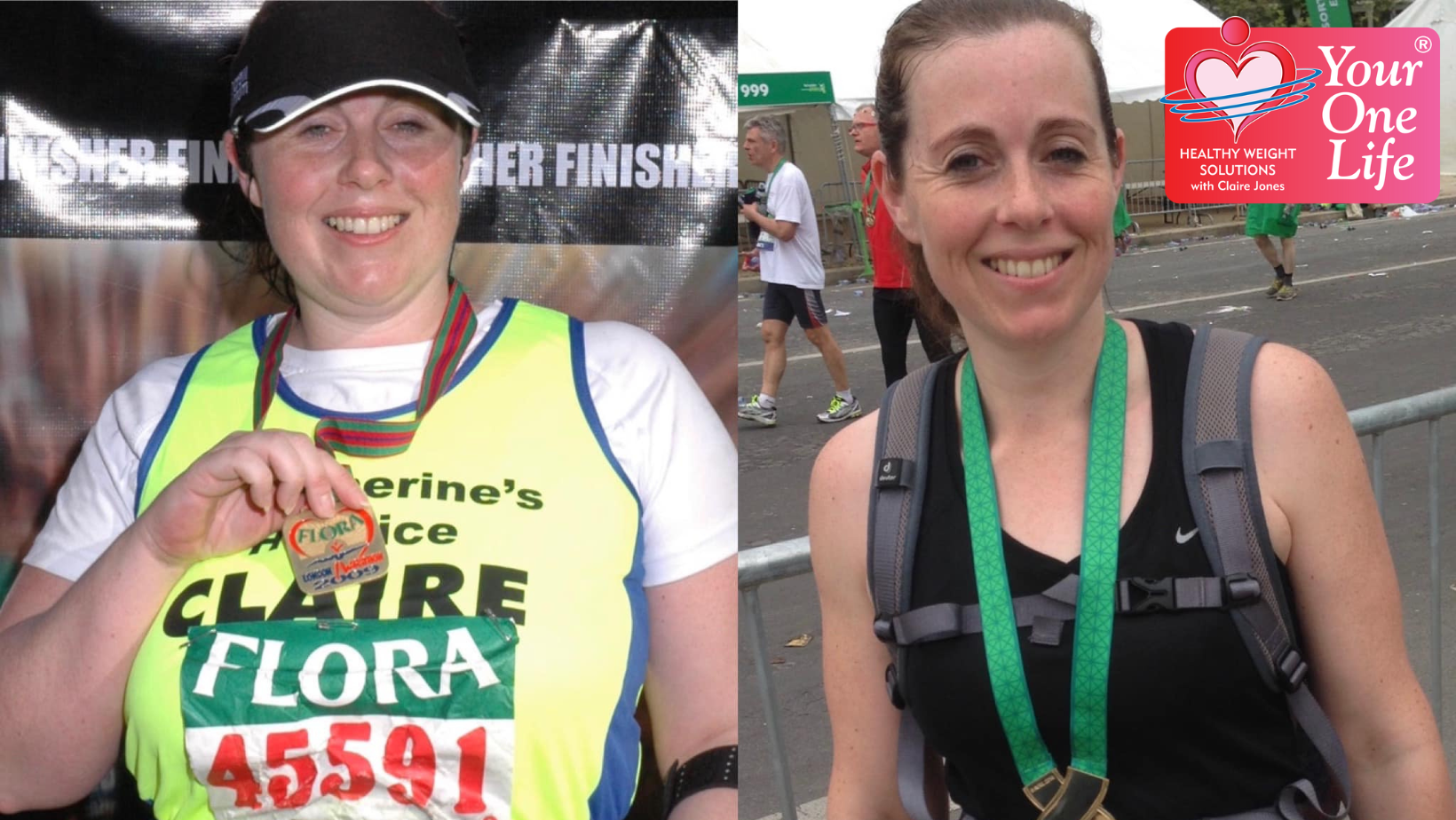
Eat Less, Move More
We are consistently bombarded by the message “eat less and move more” by the fitness and health industry, as well as the government. But what does it actually mean?
At it’s simplest, the statement makes sense – if we eat less and move more, we should lose weight, right?
Well, in my own personal experience I found that didn’t really work for me.
It wasn’t until I became an avid runner in 2007 that I started exploring why this was.
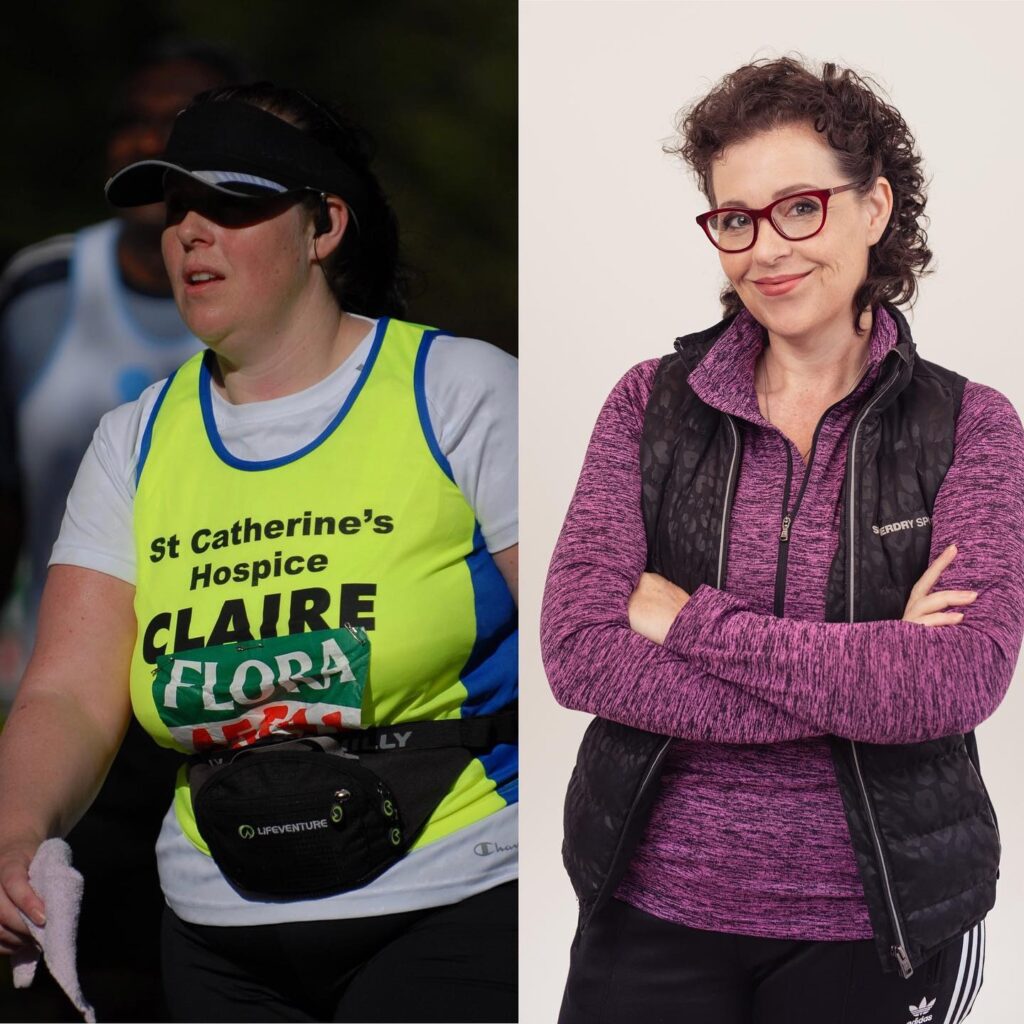
At the time I was a healthy weight, after having worked hard to lose several stones. I then went though some very difficult times and ended up gaining three stone, almost all that I had lost previously.
I ran for hours as well as dabbling in other forms of exercise.
But I soon realised that I couldn’t lose weight by running. Quite the opposite was happening! By 2009 I’d gained almost all of my weight back. (Thankfully I lost it again by 2011 and have kept it off ever since, and for the last 5 years have helped countless others lose weight).
Initially I was puzzled by this conundrum, but after finding out more, it finally started to make sense.
You can’t eat a lot less and at the same time expect your body to do more!
My personal experience made me realise I can either eat less OR I can move more – but I can’t seem to do both very well at the same time.
What helped me to understand this issue was comparing my food intake with putting fuel in my car.
It was like trying to drive a long journey but with only half the fuel to get there. My body was protesting about the amount of energy I was making it use, especially as I hadn’t fuelled it properly. It was telling me very firmly that there wasn’t enough, and encouraging me to put more fuel in by making me really hungry!
And of course, I was responding by eating more, and when I was ravenously hungry I didn’t care how much, or what impact it might have on my weight.
So the calories soon added up to more than I’d been burning while running. And I wasn’t counting them… I mean, I didn’t need to did I? I was doing lots of exercise, and feeling very virtuous for it. So I had no appreciation of why I was gaining weight.
Looking back it all makes perfect sense.
I mean, really, how can we expect to sustain a level of activity that we haven’t fuelled our body for?
It’s not long before we start to feel fatigued and lethargic as we’re not providing ourselves with enough energy to complete the demands we’re putting upon our bodies. Followed by often ravenous hunger, and the call of the donuts is strong!
And this is often where injuries can occur, or we fall ill, or completely lose motivation all together. Our bodies fight back, making us more hungry and tired, and that’s really hard to manage if we’re busy, stressed, upset or whatever.
Trying to lose weight while running long distances frequently or doing other forms of strenuous exercise is like trying to move through treacle – the harder you try, the more difficult it will become.
This is not an enjoyable way of exercising. In fact, it’s utterly miserable, so we’re unlikely to stick at it for long.
However, when we eat enough, and we’re properly fuelled for our activity levels, exercise becomes so much more enjoyable, and thus, much more sustainable.
But then it becomes more difficult to achieve a calorie deficit, which is what is required to lose weight.
But surely our bodies just use the stored energy from the fat when we’re overweight…?
Yes… to a point, but our bodies’ preferred source of energy is glucose, not fat, especially at higher intensities, as it takes much longer for our bodies to convert the fat to fuel than it does to use the easily available glucose in our blood from the carbohydrates we’ve consumed. So when we’re doing something strenuous our bodies don’t have as much time to convert the fat to energy easily, which is why we can feel sluggish and we can hit the proverbial wall.
This is why walking can be more effective than running or other strenuous forms of exercise for weight loss. More on that later.
Unless we’re doing a lot of long distance hiking it’s unlikely to trigger the body’s survival responses in the same way which means while it burns less energy, it is less likely to make us eat the energy back afterwards or end up stuck on the sofa for the rest of the day because we’re so tired. So it’s more effective for weight loss in the long run (pardon the pun!).
It’s not that moving more doesn’t burn more energy, the problem is our ability to stick to eating less and moving more at the same time.
Running and other strenuous exercise come into their own when we want to maintain our weight as we can eat enough to support it, as long as we’re not overdoing it, but it can be less helpful for weight loss.
It’s not just about energy
When we do frequent exercise, we’re not just using energy. We’re also using up important nutrients.
Any form of frequent strenuous activity, whether that be cardio or weight training, uses vitamins, minerals and protein as well as energy.
If we’re not taking enough in, and forcing our bodies to move more, our bodies need to find those resources from within. That might mean prioritising movement over other systems, like our immune system (1).
You might find that if you haven’t fuelled your body enough for that two hour run you did, your immune system may take the hit and you start feeling a cold coming on. Then it’s not long before it gets the better of you and all your plans for leading a healthy lifestyle go out the window, and you’re back on the sofa with the ice cream.
This used to happen to me, and I couldn’t understand why; but now it makes so much sense. Whilst I was trying to exercise to lose weight, I was actually causing potential damage to my health in the process, which wasn’t going to get me anywhere.
I started to realise eating less and moving more at the same time was not a good strategy for me in terms of trying to lose weight – and it’s not a good strategy for many people.
Don’t count your exercise calories
Now, when I talk about exercise, I’m really talking about strenuous exercise. Walking has shown to be one of the best things we can do to support weight loss (2). But anything more strenuous is likely to cause problems over time if we are continually eating less than our bodies need.
Some people cycle through periods of eating less, dropping activity down, to eating more and doing more activity. This worked really well for me, and what enabled me to break free from yo-yo dieting. There are various ways you can do this, which I will discuss more in another article.
But if we simply think ‘eat a lot less and more a lot more’ and expect it to result in more rapid weight loss, while it might do so initially, our bodies will soon get hungry and fight back, which is where problems can arise.
And then we blame ourselves for being unable to stick to the programme when it was never going to work in the first place!
Our bodies will try to conserve energy, sending strong signals to slow down, all while we’re forcing it to use more and more. You may find strenuous exercise causes you to become knackered for the rest of the day and you can hardly move. This is your body now forcing you to conserve energy (3).
I remember the Sunday afternoons conked out on the sofa after doing a long run in the morning.
This can have a knock-on effect, shifting your frame of mind, tricking you into thinking it doesn’t matter what you eat for the rest of the day as you’ve earned it through all the exercise. Which is exactly what happened to me.
Well, it really does matter. The number of calories actually burned through exercise is far from what your activity tracker is telling you (4). If your tracker tells you that you have burned 300 calories, that now doesn’t mean you can eat an extra 300 calories.
MyFitnessPal (MFP) is a great example. It is a great free option for tracking meals and activity. However, it will tell you how many calories you’ve ‘earned’ in exercise today. But MFP has no idea what you’ve been doing for the rest of the day. MFP doesn’t know your biology or your genetic predispositions – it is simply a guess.
Therefore, it cannot give an accurate representation of the calories you have burned. It also doesn’t take into account what your body is not using energy for while you are working out.
You haven’t earned any calories really, and thinking of it in that way can feel like a punishment and sap all the joy out of movement and encourage a toxic relationship with food and exercise.
So it’s best ignored completely.
If you are tracking calories, focus only on calories in as that’s what makes by far the biggest difference.
Your personal journey
A further problem is that the “eat less, move more” mantra fails to deal with the fundamental issue of why we are overweight in the first place. This is important to address. If we go on a diet, or exercise regime, we also need to figure out what led us to become overweight.
We need to figure out how to deal with real life, as the realities of life don’t decide to stop just because we decided to lose weight.
We should also be mindful that “eat less and move more” can mean different things to different people.
For someone who only has a stone or two to lose and only eats a little more than they should, their version of “eat less, move more” is going to be drastically different to someone who needs to lose a lot more weight, and eats a lot more than their body needs.
Half the battle is figuring out what your specific target is, doing the right calorie cutting and right exercise protocol personalised for you.
Adding lots of extra stress by cutting your calories a lot and trying to squeeze in hours and hours of exercise just isn’t sustainable.
You can’t out train a bad diet!
Another thing to point out, is that exercise is actually a stressor for the body. There is an abundance of information on how stress can interfere with weight loss.
Therefore, if we are putting our bodies through undue stress by over-exercising and under-feeding, that is going to be counterproductive for our goals. Not only that but exercising to lose weight takes time – and a lot of energy.
Most of us do not have the time or energy required to lose weight solely focusing on exercise. Thus, our focus needs to be on diet.
The saying “you can’t out-train a bad diet” is so true, as my experience shows. What goes in makes by far the biggest difference.
Ideally we want to aim for the ‘sweet spot’ (pardon the pun again) where we’re getting a great balance between calories, nutrition and enjoyment every day.
Our bodies deal with processed foods very differently to foods in their more natural state. It’s very important to not just think about energy, but the nutrition we our fuelling our bodies with, and making sure we get what we actually need.
We’re more similar than you think
The final point is about metabolism. Studies have shown that humans have what is known as a ‘constrained metabolism’. A constrained or fixed metabolism is when “total energy expenditure increases with exercise at low activity levels, but plateaus at higher activity levels as the body adapts to maintain total energy expenditure within a narrow range” (5).
Inside all that jargon, it essentially means that, regardless of whether they are a sedentary office worker or a hunter-gatherer from an African tribe, within a small margin humans all burn a similar number of calories due to the body adapting to the demands of their environment.
This is why we tend to see short term weight loss results when we do lots of strenuous exercise, but those results tail off after a while.. Our bodies haven’t switched on to what we are doing initially. Once they’ve cottoned on however, they start to distribute energy differently.
If it requires extra energy to exercise, and if inefficiently fuelled, your body may decide you don’t require as much energy at work, therefore you battle mental and physical fatigue, struggling to maintain focus.
Your body is attempting to find equilibrium in energy balance, it’s trying to bring everything back in line.
What’s really going on with weight loss?
There is a book that I highly recommend to help get your head around this – its called “Burn: The Misunderstood Science of Metabolism” by Professor of Anthropology, Herman Ponzter.
Anthropology is the study of what makes us human. Professor Ponzter talks about why we as humans behave the way we do and how our bodies have developed a very effective survival mechanism of storing fat for times of reduced abundance.
Unfortunately, in the modern world, food is available all the time. This plays on our primal instincts to eat as much as we can, and food manufacturers and retailers know this all too well, continually bombarding us with food promotions and enticing, cheap and unhealthy alternatives. “Burn” does a brilliant job of explaining just why eating less and moving more doesn’t always work.
Therefore, we need to find the right balance in terms of how much energy we need to manage our exercise and lifestyle demands while still able to lose weight and be healthy.
Your specific needs
How much exercise do you actually need? When it comes to a healthy metabolism, we need to keep moving, as we are not designed to be sedentary.
But we need to have balance with how much we move while trying to lose weight as we’re also not designed for deliberate weight loss, hence why we end up in conflict with ourselves when we try.
Figuring out our specific needs is important for making sustainable changes as those needs are different for everybody.
This is usually one of the triggers for our yo-yo dieting cycles. We start off with the best intentions, but then assume there must be something wrong with us as we’re not able to last as long as the next person before we give in.
But actually, it shows your body’s survival mechanisms are strong, trying to bring it back to where it thinks it needs to be, preparing for hardship, storing excessive supplies.
Remember, our bodies have no off switch for fat storage. Your body does not know when you’ve ‘put enough weight on’, it doesn’t understand as it’s not built into our survival mechanisms.
It takes millennia for evolutionary processes to occur, for our bodies to adapt to changes in lifestyle demands.
Humanity has only had an abundance of food supplies for the last couple hundred years with the rise of the industrial revolution in the 18th century, and even then, only in the wealthiest of countries (6).
There has not been enough time for our bodies to adapt to food in excess, therefore, it takes active focus and paying attention to our own bodies to distinguish how much food and how much exercise we need to reach our goals.
And that is exactly what I’m here to help you do with my one to one weight loss coaching, my books, my self-study programme and my free resources. See more about this at the bottom of this article.
Let’s take the stairs
So, the key to weight loss is to understand what the right amount of exercise and energy intake for you is in order to lose weight and be healthy.
As previously said, aim to move as much as you can within your ability.
Walking is one of the best forms of exercise you can do to lose weight. It requires less of a demand on the metabolism and your body, and can be sustained for extended periods of time, making it perfect for fat burning (2).
But you don’t want to be walking for three hours a day. Think about where you can build walking into your day. Even when working from home, walk around the house, walk up and down the stairs.
If you walk as much as you can through out the day whilst doing other activities, suddenly it doesn’t feel as overwhelming as having to do a three hour walk, even though you potentially could hit the same number of steps throughout the day.
And this consistency of walking every day is better, and less demanding on the body, than going to the gym once or twice a week or a long Sunday run but then just being sedentary the rest of the time.
What can you do right now?
The biggest change you can make in terms of activity is making sure you’re moving about regularly during your activities of daily living, otherwise known as Non-Exercise Activity Thermogenesis – or NEAT (7).
Your NEAT can make up 10-15% of your daily energy expenditure. Increasing your NEAT can have a cumulative effect on energy expenditure, helping you use more stored excess fat (7).
That’s why it’s important to remember what we’re doing alongside purposeful weight loss activities, not the hours of cardio or tons of weight training.
If your goal is to build muscle, you need to be in a calorie surplus (consuming more calories than you are using). If sustaining a calorie deficit, your body does not have enough energy or nutritional substrate to build new tissue, therefore, will impede your goals (8).
We need to remember that car journey. We need to remember not to count exercise calories, and that walking is one of the best and least demanding forms of activity for weight loss.
Remember these points and it will help you reach your goals – just remember to stay focused and remember why you’re doing it!
Want some help?
If this is something you’ve been struggling with, you’re most definitely not alone. Maybe it’s time to seek help from a weight loss coach. I have a variety of options to suit all budgets.
Why not join my free community for tips, information and be the first to know when I’m taking on new clients for my one to one weight loss coaching.
See you there!
Claire x
With thanks to contributing author James Jones, BSc (Hons) Psychology (1st class), PT (L3)
Claire Jones is a multi-award-winning Sustainable Weight Loss Coach, Mentor, Therapist, Speaker and Author of the popular book “How To Eat Less”. She helps people learn how to manage their weight well for life.
With a career background of over 25 years spanning the NHS, HM Prison Service, and the UK Fire Service, she had seen first-hand what happens when people don’t look after their health, and had a natural desire to help and to serve those in need.
However, it was after overcoming decades of yo-yo dieting and learning how to look after her own health, that she found a particularly unique way to be of service. She realised she had found an effective, unique and sustainable solution to the weight loss and regain cycles that so many go through, that cripples their confidence and holds them back from the lives they really want.
She is known for her relatable, down-to-earth manner and for helping her clients finally crack the code to their healthy weight and happiest selves.
References and Further Reading
1) Exercise, Nutrition and Immune Function – Gleeson, M., Nieman, D. C. and Pedersen, B. K. (2007)
· “Dietary deficiencies of protein and specific micronutrients have long been associated with immune dysfunction”
· https://www.tandfonline.com/doi/abs/10.1080/0264041031000140590?journalCode=rjsp20
2) Effects of walking speed on total and regional body fat in healthy postmenopausal women – La New, J. M. and Borer, K. T. (2022)
· “Total body fat is lost through walking at both slow and fast speeds tested in our study, but the change is more clear, rapid, and greater in overweight–obese slow walkers, and therefore slow walking would be preferable in subjects with greater starting body fatness”
· https://www.ncbi.nlm.nih.gov/pmc/articles/PMC8840715/
3) What are the signs you’re not eating enough? – Kandola, A. (2019)
· “When someone is undereating, they are consuming fewer calories than their body needs to function correctly. This can have a severe impact on energy levels, causing feelings of physical tiredness and mental fatigue, which may impair a person’s daily functioning”
· https://www.medicalnewstoday.com/articles/322157#nine-signs-and-symptoms-of-undereating
4) Fitness Trackers accurately measure heart rate but not calories burned – Dusheck, J. (2017)
· “The energy expenditure measures were way off the mark. The magnitude of just how bad they were surprised me”
5) Constrained total energy expenditure and Metabolic Adaption to Physical Activity in Adult Humans Constrained – Pontzer, H., et al. (2016)
· “Total energy expenditure model, in which total energy expenditure increases with physical activity at low activity levels but plateaus at higher activity levels as the body adapts to maintain total energy expenditure within a narrow range… subjects in the upper range of physical activity, total energy expenditure plateaued, supporting a Constrained total energy expenditure model”
· https://www.ncbi.nlm.nih.gov/pmc/articles/PMC4803033/
6) Has technology caused an obesity epidemic? – Quinn, R. (2018)
· “Technology has allowed for rise of enormous fast food chains… [and] different packaged goods that lack nutrition that humans should be getting… the industrial revolution changed the food industry forever, with its mass production of refined flour and concentrated sugars”
· https://web.colby.edu/st297-global18/2018/10/30/has-technology-caused-an-obesity-epidemic/
7) Non-exerise activity thermogenesis (NEAT): a component of total daily energy expenditure – Chung, N., et al. (2018).
· “NEAT is the energy expenditure that we do not typically consider and it includes the energy expended maintaining and changing posture (laying, standing, walking, stair climbing, spontaneous muscle contraction, fidgeting, cleaning), singing, and other activities of daily living”
8) Preserving healthy muscle during weight loss – Cava, E. C., Yeat, N. C., and Mitterndorfer, B. (2017)
· “adding exercise (endurance and resistance type) to a hypocaloric diet helps preserve muscle mass during weight loss, and resistance-type exercise also improves muscle strength… high protein intake helps preserve lean body and muscle mass”
· https://www.ncbi.nlm.nih.gov/pmc/articles/PMC5421125/
Need help?
For Weight Loss Mindset Coaching click here
For Motorcycle Mindset Coaching click here
Buy the Number 1 Best-Selling book Remember You’re a Rider here


Claire
About Claire Jones
Claire Jones of YourOneLife, is a multi-award-winning Life Coach, Mentor, Therapist, Speaker and Author of the best-selling book Remember You’re a Rider and the popular book How To Eat Less, both available on Amazon.
She helps people learn how to confidently manage their weight well for life, after successfully managing her own weight since 2011, following a 25 year yo-yo dieting battle.
With a career background of over 25 years spanning the NHS, HM Prison Service, and the UK Fire Service, she has seen first-hand what happens when people don’t look after their health, and has a natural desire to help and to serve those in need.
However, it was after overcoming decades of yo-yo dieting and learning how to look after her own health, that she found a particularly unique way to be of service.
She realised she had found an effective, unique and sustainable solution to the weight loss and regain cycles that so many go through, that cripples their confidence and holds them back from the lives they really want.
She is known for her relatable, down-to-earth manner and for helping her clients finally crack the code to their healthy weight and happiest selves.
She offers both standard and bespoke packages to work with her intensively on a one-to-one basis, as well as lower cost options to suit more limited budgets.
She also offers Mindset Coaching to people who are embarking on new ventures, including, but not limited to, motorcycle riding.
You can find out more about her services by clicking here.

Find out how I can help you
Book your FREE 15 minute discovery call (online video or phone call) to find out how I can help you.
Related posts
 Published On: February 1, 2026|6.6 min read|
What Actually Works for Long-Term Sustainable Weight Loss (and Why)
Lasting weight loss doesn’t come from restriction, pressure, or perfection. It comes from building the capacity to respond when life gets hard. That means understanding your nervous system, [...]
 Published On: December 24, 2025|6.6 min read|
First Christmas on Weight Loss Jabs? Read This Before You Try to Wing It
The weight management landscape has completely changed over the last year. With more people than ever now using weight loss jabs, many are facing their first Christmas on [...]
 Published On: December 18, 2025|9.8 min read|
How to Avoid Christmas Weight Gain
How to avoid putting on lots of weight over Christmas In short Christmas weight gain isn’t inevitable Most people gain weight at Christmas because of temptations, environment, disrupted [...]