Understanding Macronutrients: Protein, Carbohydrates and Fats and How to Eat Them for Weight Loss
March 17, 2021
 By Claire Jones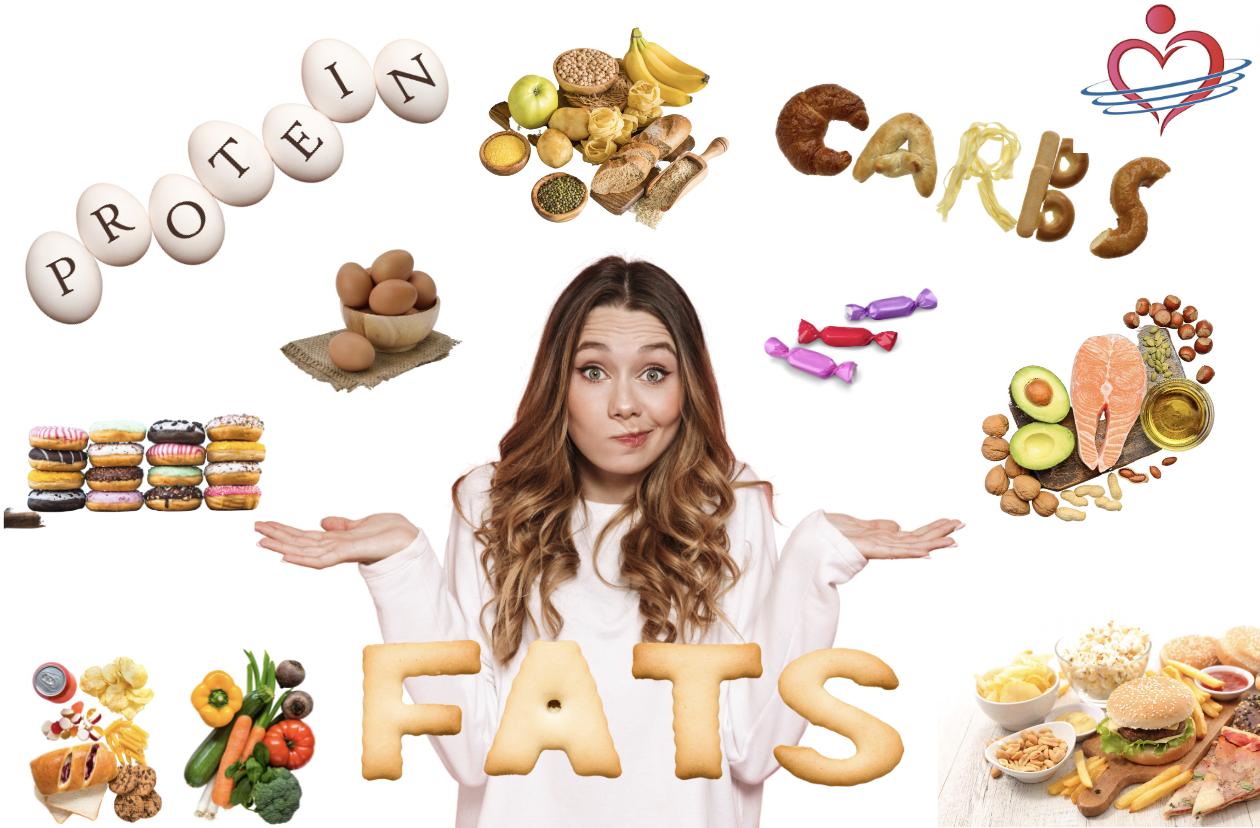
In this article I explain how to eat protein, carbohydrates and fats for sustainable weight loss. Learn how to fuel and nourish your body with balance, clarity and confidence. I’ll be covering:
- What is protein and why is it important?
- What are carbohydrates and why are they important?
- What are fats and why are they important?
- What should I eat when I am trying to lose weight?
- How much protein should I eat?
- How many carbohydrates should I eat?
- How much fat should I eat?
- How will I know how much of everything I am having?
- If I am trying to lose weight, does it matter what sorts of macronutrients I eat to lose weight, as long as I stay within my calorie allowance?
- What are good alternatives to make my calories go further?
- I do a lot of exercise. What should I eat?
- Examples of meals
- Further reading
So you want to lose weight, and you know that it is important to eat a balanced diet of protein, carbohydrates and fats, (the macronutrients). But what exactly does that look like in real life?
In this blog I will explain why having a good balance of the macronutrients is important for our health, and how we can use them to best effect to lose weight safely and sustainably. This post is best read alongside another of my articles, No BS: How to Lose Weight.
Please note: this content is not intended for those with medical conditions like diabetes, insulin resistance or eating disorders. If any of these apply to you, please consult a healthcare professional for tailored advice.
Understanding Macronutrients in Everyday Eating
We rarely think about our meals in terms of macronutrients, but most foods contain a combination of protein, carbs, and fat. Learning the basics can make food choices simpler and more intentional over time.
Start observing food labels and using tracking tools to develop your awareness. This small effort will pay off by making your food decisions easier and more aligned with your goals.
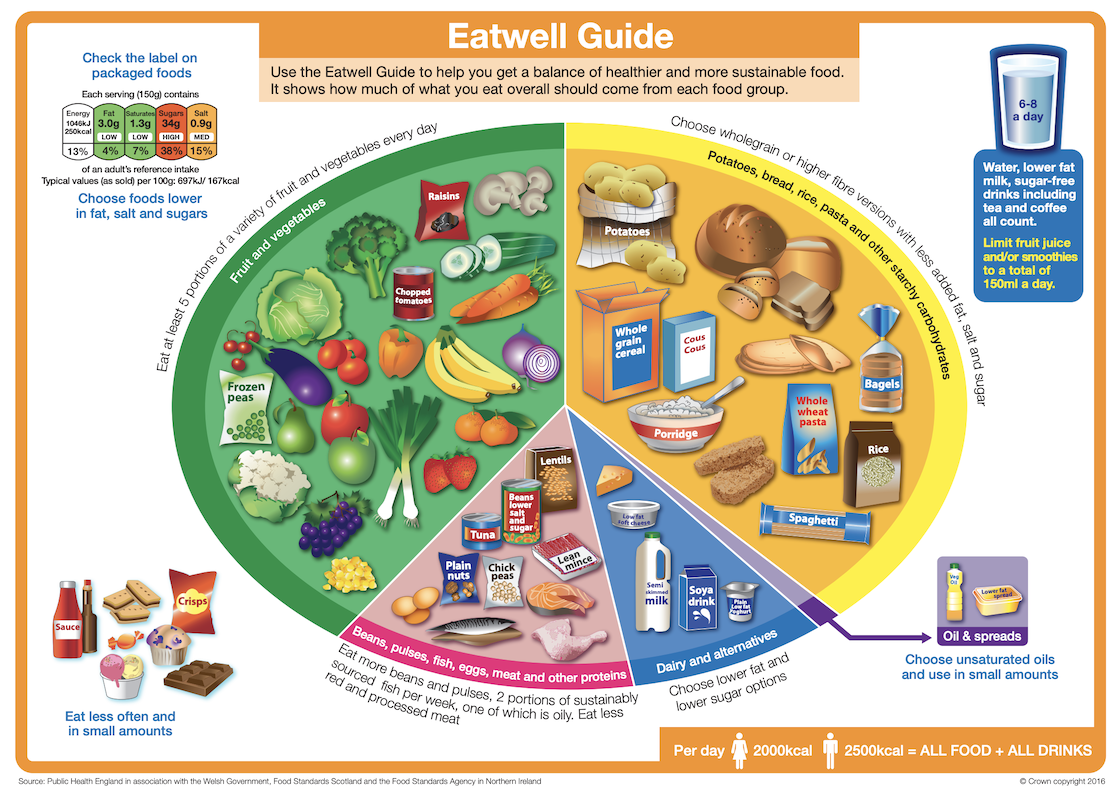
The Eatwell Guide, and apps like Myfitnesspal can label foods differently, which can be confusing. However, knowing how to identify macronutrient content empowers you to make more informed choices. For example, dairy products often contain both protein and fat, while foods like beans and lentils are a mix of carbohydrates and protein.
Start observing food labels and using tracking tools to develop your awareness. This small effort will pay off by making your food decisions easier and more aligned with your goals.
What is protein and why is it important?
Proteins are made of amino acids – the building blocks your body needs to repair muscles, create enzymes, and produce hormones. Your body is constantly renewing itself, and protein plays a key role in that process.
When you reduce calories to lose weight, your body may try to use protein for energy. This is why eating enough protein is crucial. It helps preserve muscle mass, keeps you fuller for longer, and supports your body’s natural repair systems.
Animal proteins provide all essential amino acids, but plant-based sources can meet your needs when eaten in variety. Whether you’re a meat-eater or plant-based, focusing on protein quality and variety is key.
Common protein sources: lean meats, fish, eggs, dairy, soy products, legumes, and tofu.
There are 20 different amino acids that our bodies need. Some amino acids we can actually make in our bodies, so they are not essential, but others we have to get from our diet. For some of those amino acids that we make, we need to be in good health in order to do so, and not suffering illness or injury. At these times therefore it is especially important that we are eating enough proteins in our diet. We also need higher levels of protein, and energy intake, for recovery from illness and injury. That is not a time to try to lose weight, unless part of managing a weight-related health condition under the care of a doctor.
Some foods contain all the amino acids that we need, and these are usually animal sources. Other foods only contain some, and so it’s important to choose from a variety to foods to ensure we are eating enough proteins to maintain good health, especially if we are following a vegan or vegetarian way of life.
Almost all natural foods contain some protein but the foods where protein is the highest macronutrient are things like meat, fish, seafood, eggs, soy, tofu and quorn. Lentils, beans and peas, whilst higher in carbohydrates, are still very good sources of protein for non-meat-eaters.
Please see the links at the end to read further about protein.
What are carbohydrates and why are they important?
Carbohydrates come in different forms… simple and complex, and are the main source of energy that our bodies use. The simpler the form, the easier it is for the body to use.
Simple carbohydrates are things like sugar, syrup, fruit juice concentrate.
Complex carbohydrates are known as starch, and these include things like bread, pasta, rice and potatoes, and they release energy more slowly – although there is a huge range to this according to how much fibre there also is in the food, and how processed it is. Also by adding protein and fat to carbohydrates in the form of a meal you can also help to slow down the release of energy. You may want to read about the Glycemic Index.
Then there are the non-starchy fibrous carbs…the non-starchy fruit and vegetables. These are all the things in the green section of the Eatwell Guide, and you really don’t need to limit your quantities of these. They have great health benefits including slowing down our digestion, keeping our gut healthy and of course contain many of the vitamins and minerals that we need to sustain good health.
Please see the links at the end to read further about carbohydrates.
What are fats and why are they important?
Fats used to be seen as the enemy but it is now understood that fats are extremely important in our diet for good health. We just have to choose carefully and limit the quantities. There are different types of fats, some better for our health than others, but they ALL have 9 calories per gram.
Fats provide us with a large store of energy, make hormones, make up our brains and our cell membranes and they carry the very important fat-soluble vitamins to where they are needed in our bodies. So like protein, it is easy to see why we might run into trouble with our health if we don’t get enough in our diets. Our bodies are continually building up and breaking down fats in order to use them
Fats are saturated, monounsaturated and polyunsaturated and we especially need the mono and polyunsaturated fats in our diets as they have particular properties that support our health.
Saturated fats are those which are solid at room temperature, such as butter, lard and cheese, while mono and polyunsaturated fats are liquid at room temperature, such as oils. Fats are also found in varying quantities in many unprocessed foods high in protein; we tend not to eat many fats on their own, we usually use them for cooking, spreading, dressing and topping. Cutting these down or out is an easy way to cut down on calories without changing too much else.
Please see the links at the end to read further about fats.
Macronutrients and Weight Loss: Advice From a Weight Loss Coach
Unless you’re following a specialised plan, the general guideline is:
- 45-65% of calories from carbohydrates
- 15-35% from protein
- 20-30% from fats
These are flexible, and your specific needs may vary. Focus on balanced meals in line with the Eatwell Guide.
From years of working with clients, one thing is clear: sustainable weight loss is about consistency, not perfection. Balancing your macronutrients is not about strict percentages or hitting exact numbers. It’s about creating meals that satisfy, nourish, and align with your goals.
A good place to start is aiming for:
- 45–65% of your calories from carbohydrates
- 15–35% from protein
- 20–30% from fats
Instead of fixating on the numbers, think in terms of food groups and portion sizes. What helps my clients most is finding a rhythm. Meals that include a source of protein, a fibre-rich carbohydrate, and some healthy fat. This structure reduces cravings, supports energy, and makes healthy eating feel achievable in everyday life.
Many people believe they’ve failed at weight loss because they lack discipline. But most often, they’ve simply lacked a plan that works with — not against — their lifestyle. That’s where tailored coaching support makes all the difference.
Together, we track what’s working, adjust what’s not, and focus on the deeper behaviours and beliefs that influence food choices. You won’t just learn what to eat — you’ll learn how to think about food in a way that supports your long-term success.
Remember, your needs may vary depending on activity level, life stage, or health conditions. A coach’s role is to help you personalise this so it works for you — not just on paper, but in your real day-to-day life.
How much protein should I eat?
Proteins contain 4 calories per gram, but the body will use them for all the reasons described above before it will use them for energy. Most sedentary adults in good health need about 1g of protein per kg of bodyweight, so a 140 pound /10 stone/63kg woman doing little exercise would need around 63g of protein per day, on average. This is achievable on a balanced diet by having 1 palm sized portion of protein at main meals and including some protein in 1-2 snacks per day. So this could consist of porridge for breakfast, tuna or cottage cheese at lunchtime and chicken breast or tofu at dinner time and some nuts and greek yogurt at 2 snacks.
The more active we are, or if we are ill or injured, the more protein we need. Protein also helps us to keep fuller for longer, which can help with managing hunger when trying to lose weight, and also helps us to preserve our lean tissues. If you are not sure how much to have, it’s better to aim for more than less, especially if you are very active. The body will get rid of any amino acids it doesn’t need but may use the excess protein as energy so it’s important to still stay in a calorie deficit to lose weight. There are varying reports on whether too much protein is harmful or not, but if in a calorie deficit it will be very difficult to have too much. See below for more.
How many carbohydrates should I eat?
Carbohydrates contain 4 calories per gram, the same as protein. General advice is that our diet should be highest in carbohydrates but care needs to be taken as to what they consist of. Aiming for minimally processed forms, high in fibre most of the time is ideal, not just in terms of giving us longer lasting energy and helping to control insulin problems, but also in terms of the micronutrients (the vitamins and minerals) that they contain. This also gives us a greater volume of food for the calories consumed and helps to keep us fuller for longer. Any excess carbohydrates consumed will be stored first in the liver and muscles, as glycogen, for energy, and then as fat. See below for more. As mentioned previously, please note this information is aimed at people not suffering any health problems such as insulin resistance or diabetes, who will need more specialist advice.
How much fat should I eat?
Fats contain 9 calories per gram, over twice that of protein and carbohydrates. Fat should ideally take up no more than 20% – 30% of our calorie intake, with the majority of that coming from mono and polyunsaturated fats. See below for more.
How will I know how much of everything I am having?
If you are just getting started, using the Eatwell Guide can be really useful. Print it off, study it, get to know it.
If you are not used to managing portions or feel you need to get to know more about the foods you are eating, including how much energy is in them, then you could build on this by using a tracker like Myfitnesspal.
Then there is the hand portion guide, which very basically, for each main meal, is:
- 1 palm-sized portion of protein rich food eg meat, fish, tofu, 2 eggs etc
- 1 cupped palm of carbohydrate rich food eg potatoes, pasta, rice, peas, beans,
- 2 cupped palms of non-starchy fibrous fruit and vegetables
And optionally
-
- 1 thumb of fats eg butter, hard cheese, oil, cream, bearing in mind most foods containing protein also contain fats this may not be necessary, depending on what else you are eating.
As our hand sizes tend to vary according to our own size, and are easily accessible for measuring, this is a very quick and easy way to keep control of portion sizes. We can adjust upwards according to our needs- men or extremely active women may need up to to two of each serving. You can play around with it and see what happens to your weight to find out what you need.
I would also highly recommend downloading and printing this excellent article from Precision Nutrition www.precisionnutrition.com/what-should-i-eat-infographic.
If I am trying to lose weight, does it matter what sorts of macronutrients I eat to lose weight, as long as I stay within my calorie allowance?
Yes it does… quality is just as important as quantity. As I have explained in my blog posts No BS How to Lose Weight and An Introduction to Emotional Eating, amongst others, when we eat heavily processed foods, which tend to be higher in saturated fat, refined sugar, and salt, our bodies digest them quickly and easily and we crave more of them, which makes us want more… making it so much harder to stick to any programme. They are also thought to be linked to various health problems.
So not only does this introduce things into our bodies that we’re not very well-equipped to deal with, and don’t make us feel that great, we also don’t get much ‘bang for our buck’, and the body digests them really quickly so we don’t stay full for long and can quickly feel hungry or have cravings again soon after, and often give in to them. This does no good for our confidence in our ability to lose weight.
So always aim to choose foods that are as close to their natural state as possible, and avoid adding extra sugar. Eg rolled porridge oats with some dried fruit rather than adding sugar or syrup to sweeten it. Frozen and tinned foods are fine if they are still in their original form.
What are good alternatives to make my calories go further?
A quick search on google or Pinterest will give you lots of ideas but here are a few:
-
-
- Change white rice to brown or wild rice, or cauliflower rice
- Change white potatoes (including chips and mashed potatoes) to carrot and swede mash, or sweet potatoes
- Change regular pasta to whole-wheat pasta, or spiralised vegetables such as courgette
- Change white bread to whole-wheat or whole-grain bread
- Change sugary breakfast cereals to high fibre, low-sugar cereal like oats, or have eggs for breakfast instead
- Change crisps to small flat palm of nuts, or nibble on carrot sticks
- Change ice cream to Greek yogurt and fruit
- Change chocolate bar to banana and small flat palm of unsalted nuts.
- Change milk chocolate to dark chocolate – it’s harder to eat as much!
- Change cream to creme fraiche
-
I do a lot of exercise. What should I eat?
When it comes to exercise, food is fuel, and the higher the quality the better. You wouldn’t put low quality fuel into a high performance sports car, or not put any fuel in it, and then expect it to work properly, so think of your body in the same way.
Make sure your diet is high in good quality protein and carbohydrate sources at all times, eat well in the hours before exercising, with a combination of complex carbs but allow a good 2 hour gap to digest what you have eaten. While it is possible to exercise on a diet low on carbohydrates, bear in mind that performance is likely to be affected.
Try to eat a meal high in both protein and carbohydrates as soon as possible after exercising, to replenish your body’s glycogen stores and to enable your muscles to repair themselves, promoting a faster recovery. Protein shakes and bars are handy for convenience but not essential unless you are undertaking an intensive training regime. They can be loaded with sugar too, so make sure you read the labels if you choose to have these.
It takes the body a long time to digest fat, so it’s not ideal to eat foods high in fat before exercise as it may not be a very enjoyable experience.
Examples of meals
Here are a couple of examples of my own balanced, far from perfect, but ok, diet. One day represents convenience and the other day represents cooking dinner from scratch. I am the first to admit I am not very inventive when it comes to cooking and recipes. I prefer to keep things very simple, but there are some great websites out there such as Pinch of Nom that can help you.
Please note the change in fat and protein % between the two days. I show you this to illustrate that a single day’s change in balance won’t make any difference, as long as the balance over time is within the ideal range.
Each meal has a balance of all nutrients with the exception of the banana in the morning snack on day 2. Some food is processed, some is unprocessed. On both days I am in a calorie deficit, in that I am eating less calories than my body needs, in order to demonstrate an example of how it can be done while eating a mix of mainly unprocessed foods and a small proportion of treats. I normally eat more than this, closer to 2000 calories, as I am not trying to lose weight.
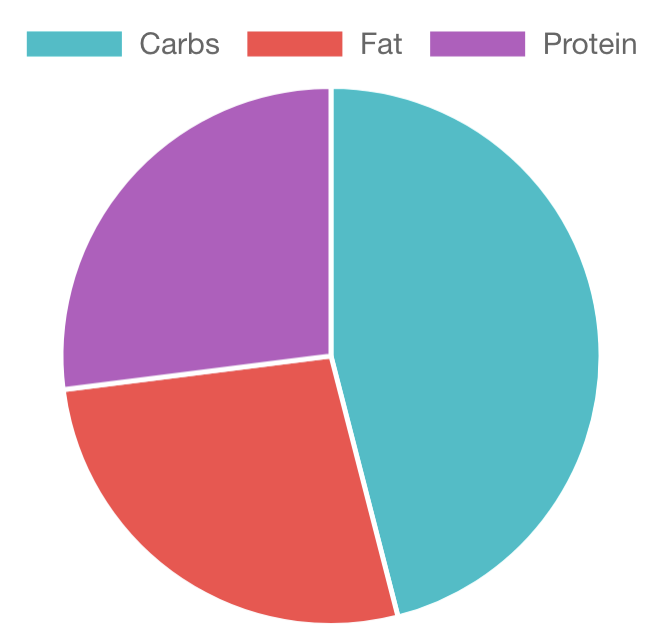
Day1: Convenience-focussed
Breakfast
Quaker – Oat So Simple Pot, 45 g
Half a pack of Whitworth’s – Berry & White Chocolate Shot, 12.5 g
Lunch
Morrisons – British Shorthorn Steak Pie, 132 grams
Birds Eye – Steam Fresh Family Favourite Mix, 135 gram
Afternoon Snack
Other half of Whitworth’s – Berry & White Chocolate Shot, 12.5 g
Tesco – Mixed Nuts and Raisins, 25 g
Dinner
Morrisons Savers Macaroni Cheese, 400 g
Peas 80 g
Other
Semi-Skimmed Milk, 300ml for use in tea and coffee
Total calories 1550 approx
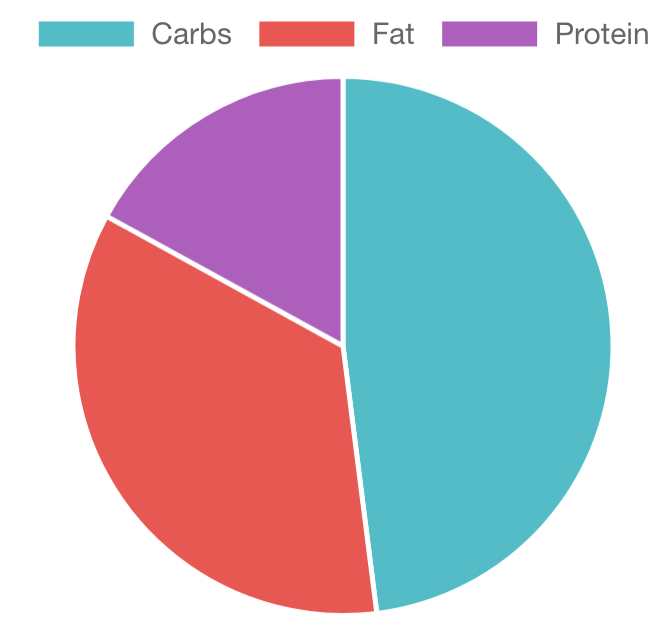
Day 2: More cooking from scratch
Breakfast
Fuel 10k – porridge golden syrup , 70 gram
Morning Snack
Banana – (Small)
Lunch
Egg, 2 large
Wholemeal muffin
100% peanuts Peanut Butter Crunchy, 10 g
Green Salad – Green Salad,
50g Lindt – 90% Cocoa, 10 g
Dinner
Morrison – Chicken Breast Fillet, 182 g
potatoes – new Boiled, 120 g
Carrot – 1 Medium Size, 61 g
Cauliflower, 1 cup, chopped
Bisto – Gravy, 150 ml
Cranberry sauce, 10 g
Rich tea – Biscuit, 2 piece
Other
Skimmed milk 400 ml
Magnum Mini – Double Caramel, 1 bar (54 ml)
Total calories 1650 approx
Final Thoughts
If you found this helpful why not check out my top 10 tips for eating less without dieting, for some tips on how to manage your food intake in general.
If you need a bit more support why not check out my book, How to Eat Less, where I cover how to consume fewer calories without feeling like you’re on a diet, or purchase my High Protein Recipe e-Book.
Further reading
BNF : A Healthy Balanced Diet
YourOneLife: When and how much protein to eat
Precision Nutrition:What should I eat?
Wikipedia: About protein
Wikipedia: About carbohydrates
NHS: About fats
NHS: The Glycemic Index
Need help?
For Weight Loss Mindset Coaching click here
For Motorcycle Mindset Coaching click here
Buy the Number 1 Best-Selling book Remember You’re a Rider here


Claire
About Claire Jones
Claire Jones of YourOneLife, is a multi-award-winning Life Coach, Mentor, Therapist, Speaker and Author of the best-selling book Remember You’re a Rider and the popular book How To Eat Less, both available on Amazon.
She helps people learn how to confidently manage their weight well for life, after successfully managing her own weight since 2011, following a 25 year yo-yo dieting battle.
With a career background of over 25 years spanning the NHS, HM Prison Service, and the UK Fire Service, she has seen first-hand what happens when people don’t look after their health, and has a natural desire to help and to serve those in need.
However, it was after overcoming decades of yo-yo dieting and learning how to look after her own health, that she found a particularly unique way to be of service.
She realised she had found an effective, unique and sustainable solution to the weight loss and regain cycles that so many go through, that cripples their confidence and holds them back from the lives they really want.
She is known for her relatable, down-to-earth manner and for helping her clients finally crack the code to their healthy weight and happiest selves.
She offers both standard and bespoke packages to work with her intensively on a one-to-one basis, as well as lower cost options to suit more limited budgets.
She also offers Mindset Coaching to people who are embarking on new ventures, including, but not limited to, motorcycle riding.
You can find out more about her services by clicking here.

Find out how I can help you
Book your FREE 15 minute discovery call (online video or phone call) to find out how I can help you.
Related posts
 Published On: February 1, 2026|6.6 min read|
What Actually Works for Long-Term Sustainable Weight Loss (and Why)
Lasting weight loss doesn’t come from restriction, pressure, or perfection. It comes from building the capacity to respond when life gets hard. That means understanding your nervous system, [...]
 Published On: December 24, 2025|6.6 min read|
First Christmas on Weight Loss Jabs? Read This Before You Try to Wing It
The weight management landscape has completely changed over the last year. With more people than ever now using weight loss jabs, many are facing their first Christmas on [...]
 Published On: December 18, 2025|9.8 min read|
How to Avoid Christmas Weight Gain
How to avoid putting on lots of weight over Christmas In short Christmas weight gain isn’t inevitable Most people gain weight at Christmas because of temptations, environment, disrupted [...]